

Stop Chasing Measures. Start Designing Workflows That Print Quality and Revenue

If you are a director inside a health plan or a healthcare champion trying to make a name for yourself, this is for you. The fastest path to better HEDIS, higher Stars, and real P4P dollars is not more dashboards, not another chart-chasing vendor, not a year-end “blitz.” It is the boring, operational art of embedding gap closure into daily clinical flow so that every encounter quietly lifts quality and unlocks payment.
The problem behind the problem
Most organizations still treat quality as an after-market attachment. Measures live in reporting teams, not on exam room checklists. Outreach sits with a vendor, not inside the care team’s day. Then Q4 hits, and the scramble begins. You know the playbook: faxes, phone trees, manual record retrieval, harried providers, annoyed members. Scores move a little. Culture does not move at all.
Here is the uncomfortable truth. If your plan can only lift measures with retrospective effort, you are paying a tax for every point of improvement. If you redesign the workflow so gaps close in the moment of care, you collect compound interest.
Medicare Advantage Star incentives alone are now a billion-dollar lever across the industry, with a clear revenue cliff when plans slip below 4 stars. The chart on page 3 shows bonus totals rising into the tens of billions, which is why leadership attention spikes the minute ratings wobble. Your job is to build a system that never needs a wobble fix in Q4 because Q1 to Q3 already baked the lift into care delivery. Framework for Aligning Care Gap.
A simple framework that forces alignment
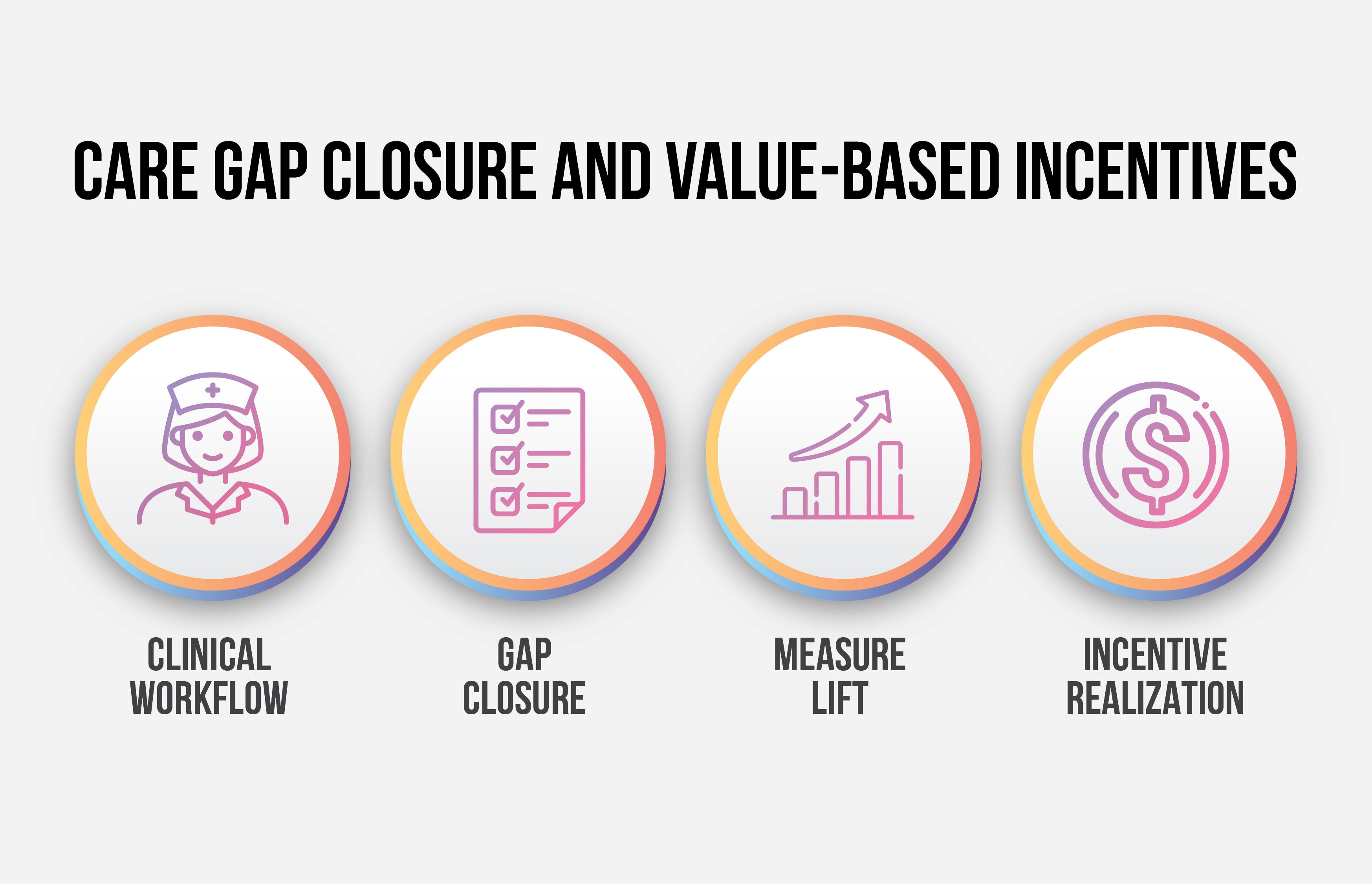
Use this four-step chain as your north star:
Clinical workflow → Gap closure → Measure lift → Incentive realization
Clinical workflow means what actually happens in the room, in the pharmacy, on the phone, and through remote devices. If it is not in the flow, it is charity.
Gap closure is not a report. It is a completed mammogram order, a documented blood pressure at goal, a mailed FIT kit that came back, a statin started today.
Measure lift is the by-product. If you must “push the score,” your workflow upstream is broken.
Incentive realization is the cash register ring: Stars bonus, Medicaid withhold return, employer P4P payout, improved rebates, better steerage.
This chain gives you a ruthlessly practical test. For any initiative, ask: where exactly in the care journey does the gap close, and who owns that moment. If the answer is a data vendor or a monthly file drop, the chain is already broken.
High-yield plays you can run next quarter
You do not need another transformation initiative. You need a small number of plays that punch above their weight and are painless to adopt.
1) Stack gaps in the annual visit
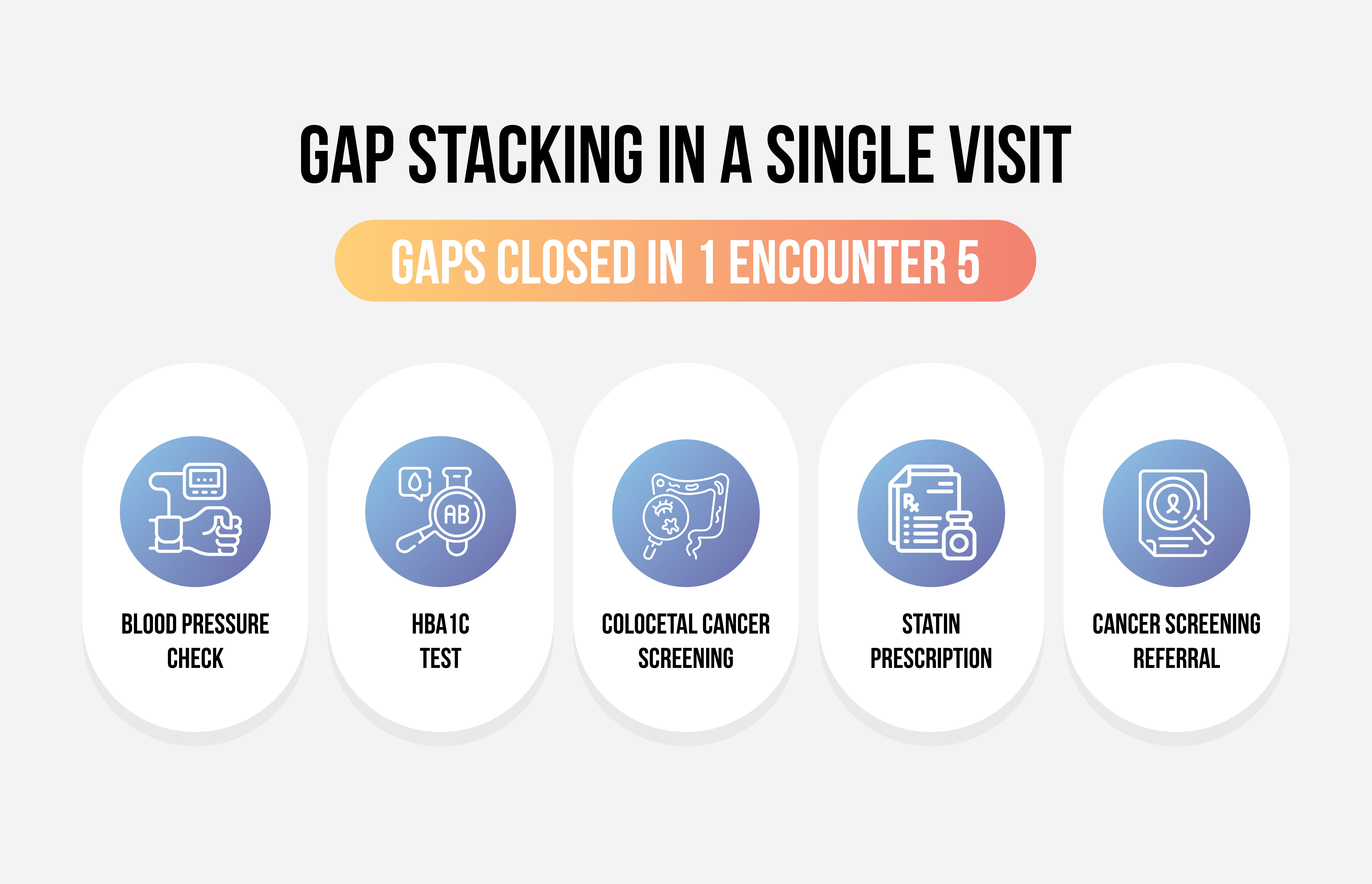
The annual wellness visit in MA is the Swiss Army knife of quality. Make it a default, not a suggestion. Pre-visit planning flags every open gap for the next week’s schedule. The medical assistant walks in with a checklist and standing orders. One visit can address blood pressure control, colorectal screening, diabetic eye exam referral, nephropathy testing, immunizations, depression screening, and medication reconciliation. That is seven measures touched, one member experience, one staffing pattern. You earn both quality points and better coding completeness.
Pushback you will hear: “We already do AWVs.” Probe the process. Are standing orders live or still in a binder. Are eye photos available in-clinic. Do MAs have autonomy to queue orders. If not, you are leaving money on the table.
2) Put pharmacists on the front-line of triple-weighted measures
Medication adherence measures carry heavy Star weights. A pharmacy-led protocol with simple rules can move them quickly. Identify every member overdue on fills for RAS antagonists, statins, and key diabetes meds. Give the pharmacy a clean roster weekly. Let them own the outreach, refills, prior auth friction, and adherence counseling. Codify warm handoffs to PCPs when clinical issues surface. When pharmacists run adherence like a supply chain, your Stars math gets easier, and members stay safer.
Challenge your own bias here. If your first instinct is to treat pharmacy as a vendor to manage, consider flipping the model. Treat pharmacy as a care venue to activate.
3) Remote readings that count
Home blood pressure cuffs and connected glucometers are not shiny objects. They are a way to move outcome measures without waiting for the next visit. Set auto-nudges for abnormal trends. Authorize protocol titrations for care managers under supervision. Make the reading of record flow back into the EHR so it “counts” for the measure. If you cannot trust the data stream, fix that pipeline first. The whole point is closing the gap on a Tuesday afternoon, not three months from now.
4) Design the tele-gap visit
Create a 15-minute telehealth slot type whose sole purpose is gap closure. Staff it with an MA plus clinician sign-off. Script it like a mini-AWV. Order screens, queue refills, schedule follow-ups, mail FIT kits, close documentation fields that trip audited measures. Do not overthink the economics. The ROI lives in Stars and P4P.
5) Make the EHR good at one thing
No EHR will be the quality platform of your dreams. It does not need to be. It needs to do one job reliably: surface the next best gap to close at the exact right moment. Kill noisy alerts. Keep one compact panel in the header that shows due screenings and chronic care items with one-click orders. If it takes five clicks, it is a fantasy.
The prioritization lens leaders should use
Not all gaps are equal. If you do not sequence work, your teams will drown in alerts.
Clinical value comes first. Blood pressure control and diabetes control save lives. Treat them that way.
Program weight matters. Patient experience and medication adherence have outsized impact in Stars. If your CAHPS is sagging, no amount of chart closure will save you.
Contract math should be explicit. Medicaid withholds, employer guarantees, and MA bonus thresholds are different animals. Map the measure to the money.
Distance to threshold gives you an efficient frontier. If you can push a measure across a cut point with reasonable effort, do it early in the year so teams see the win and habits stick.
Create a one-page “quality frontier” that shows measure weight, current performance versus cut points, and a plain-language description of the workflow that closes the gap. Post it. Lead to it. Fund to it.
What to stop doing
If you need the courage to say no, use this list.
End-of-year chart chasing as a strategy. Use it as a safety net, not a business model. Every dollar here crowds out dollars for workflow.
One-off screening events that do not connect back to primary care. They spike numbers, then members get lost. If you run an event, build the referral and follow-up loop first.
Measure maximalism. If your teams are staring at 60 metrics, you have already lost. Shrink the set that the front-line sees. Keep the rest in the analytics back office.
Common objections, answered
“Providers are burned out, they will not do more.” Do not ask them to do more. Ask them to do fewer clicks and fewer callbacks by letting MAs and pharmacists carry standing orders and outreach. Your job is to remove friction, not add it.
“Members ignore our mailers and robocalls.” Of course they do. Stop treating outreach as a compliance exercise. Use channel fit. Text for FIT kits with a direct order link. Live calls for complex chronic members. Pharmacy pickup reminders for adherence. If you cannot measure conversion by channel, build that capability first.
“Data is messy.” It always will be. Perfect is not the bar. Good enough to move decisions in the room is the bar. If your quality team cannot turn claims and clinical feeds into a daily queue for MAs, fix the pipeline before buying another reporting layer.
Where AI helps, and where it does not
AI should make doing the right thing the easy thing. Use it to:
Predict who will fail a measure without a nudge so outreach prioritization is not guesswork.
Auto-complete documentation for quality elements buried in the visit narrative so clinicians are not hunting checkboxes.
Transcribe and analyze member calls to flag social barriers like transport or food, then drop tasks directly into the care manager queue.
Do not expect AI to fix a broken process. If there is no clear owner for the gap at the point of care, an algorithm will only accelerate confusion.
The culture shift that actually sticks
Leaders who win here do three things consistently.
They move quality out of the reporting silo and into operations. Quality leaders sit in the same daily huddles as clinic managers and pharmacy leads. Weekly review is about throughput and cycle time, not just rates.
They celebrate gap stacking, not heroics. When one encounter closes four gaps, tell that story. Show the time saved, show the member experience win, show the measure movement, show the revenue line it touched.
They manage to the chain, not the score. When a measure is off pace, they do not ask for more outreach volume. They ask which step in the chain is broken. Wrong alert timing. No standing order. Pharmacy not in the loop. Fix the step, not the slide.
A note on incentives and ethics
Yes, there are real dollars tied to this work. Yes, there are risks when organizations over-index on metric optics. The answer is not cynicism. It is governance. Pick the high-value measures. Watch for over screening in frail populations. Track equity gaps by geography and language. Reward teams for outcomes and member trust, not just counts.
If you want a forcing function, teach this rule to your managers: the only good gap is the one that made the member’s life better and showed up in the measure. Anything that fails either test should not survive the next quarterly plan.
Make it actionable in 90 days
Week 1-2: Publish the one-page quality frontier. Select five measures for front-line focus. Approve standing orders for each.
Week 3-6: Launch the tele-gap visit template. Stand up the pharmacy adherence pod with weekly rosters and target conversion rates. Turn on a single clean EHR panel for gap prompts.
Week 7-10: Put remote BP and glucose kits into the hands of the highest-risk members. Wire the data so it counts. Start reporting daily close rate, not monthly percentages.
Week 11-12: Kill two legacy workflows that add clicks without closing gaps. Use the capacity you free to expand the MA protocol or pharmacy outreach.
If you deliver those four moves, you will feel lift before the quarter ends. More important, your teams will feel the work getting easier. That is how you know the design is right.
Directors, this is your chance to change the conversation internally. Do not promise another analytics layer. Promise a workflow your clinicians can feel. Promise a member experience that does not nag, it helps. Promise financial results that follow because you built a machine where closing a gap is the natural by-product of good care.
You will not win this by shouting “quality” louder. You will win it by making quality the path of least resistance.
I’m Daniel Yeboah is the founder and CEO of Revella Health, a healthcare technology company helping providers and payers close care gaps and reduce avoidable hospitalizations. I write about innovation, access, and the future of value-based care. Connect with me on LinkedIn.